
Why it works
The power
of small acts.
A wave. A nod. A moment of encouragement. Tiny interactions can remind someone that they are seen—and help turn a campus into a community.
The challenge
Disconnection is more than a bad feeling.
In 2023, U.S. Surgeon General Dr. Vivek Murthy released Our Epidemic of Loneliness and Isolation, documenting how persistent disconnection has become common among American adults—a trend that predates the pandemic and has continued beyond it.
The report connects chronic loneliness with serious health consequences, including increased risk for heart disease, stroke, dementia, and premature death. Its effect on lifespan can be comparable to smoking up to 15 cigarettes a day.
Our Epidemic of Loneliness and Isolation · 2023
“Loneliness is far more than just a bad feeling.”
Dr. Vivek H. Murthy, U.S. Surgeon General
The antidote
Notice someone.
Dr. Robert Waldinger directs the Harvard Study of Adult Development, one of the longest-running studies of human wellbeing. He points to something remarkably simple as part of the antidote: brief, low-stakes contact with people we do not know well.
A wave. A nod. Small talk with a stranger. These tiny interactions do real psychological work. They signal that both people have been seen—and that signal tends to land well, even between people who have never met.
“People love to be noticed.”— Dr. Robert Waldinger
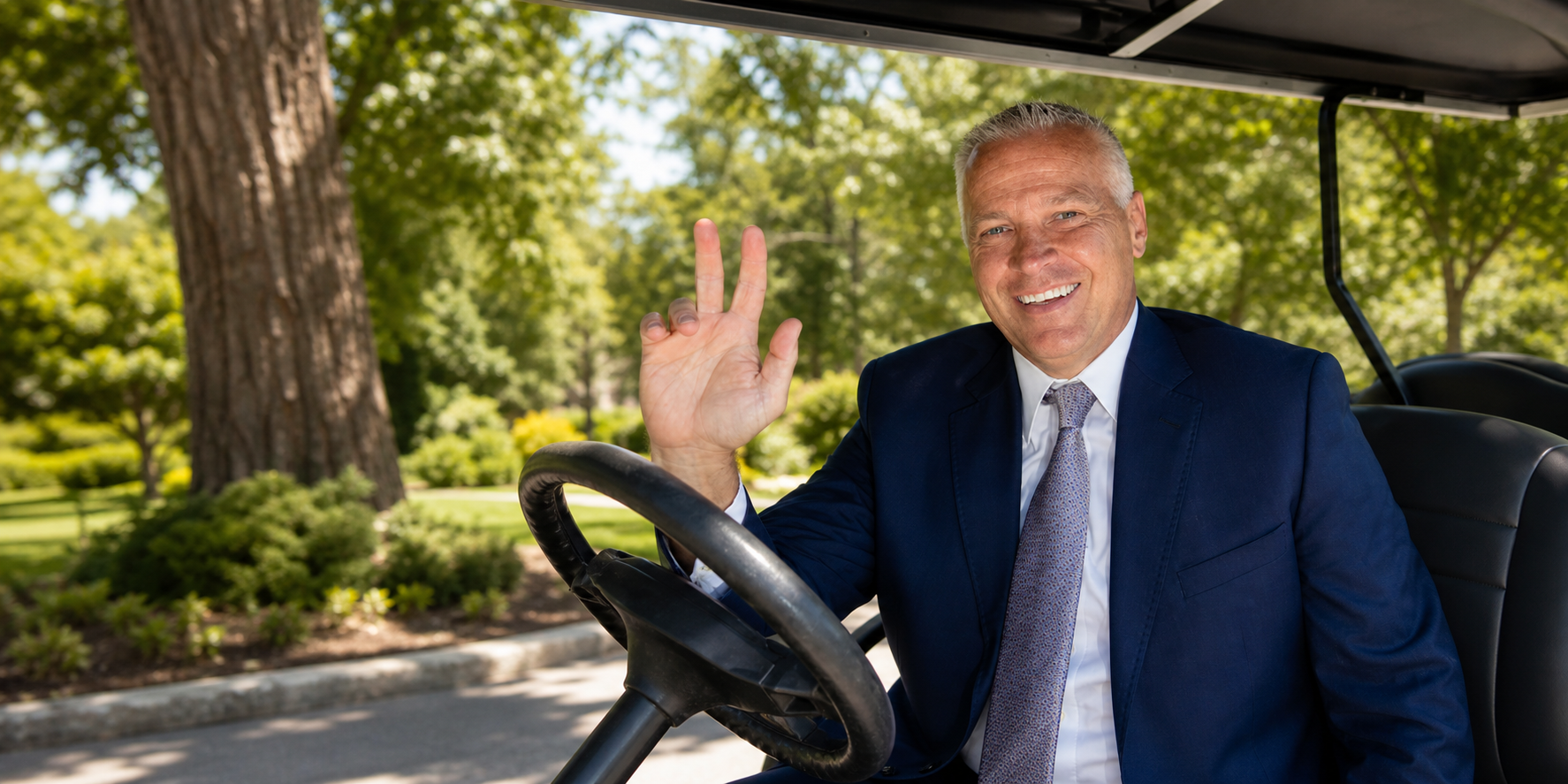
President Reese’s example
Look up.
Reach outward.
President Shane Reese draws a direct line from this research to life on a college campus. The most useful thing a student can do to counter isolation is not complicated: step outside your own routine for a moment and notice the people around you.
Wave through a window.
A simple gesture says, “I see you.”
Choose a smile.
Look up instead of lowering your gaze.
Take out an earbud.
Make enough room in the day to say hello.
“It obliterates that sense of loneliness … and it’s such a small act.”— BYU President Shane Reese
The BirdsEye view
A wave
you can hold.
That is the premise BirdsEye is built on: take the uplifting BirdsEye view to overcome a narrow focus on yourself. If a wave through a car window can do this much, we wanted to see what a paper airplane could do—uplift and encouragement folded into something another person can open, keep, and pass on.
Help us uplift ↗“Get outside yourselves.”
“The single biggest transformative thing students can do as young people, in a kind of a social-isolationist world, is to get outside themselves.”
— BYU President Shane Reese, Deseret News